


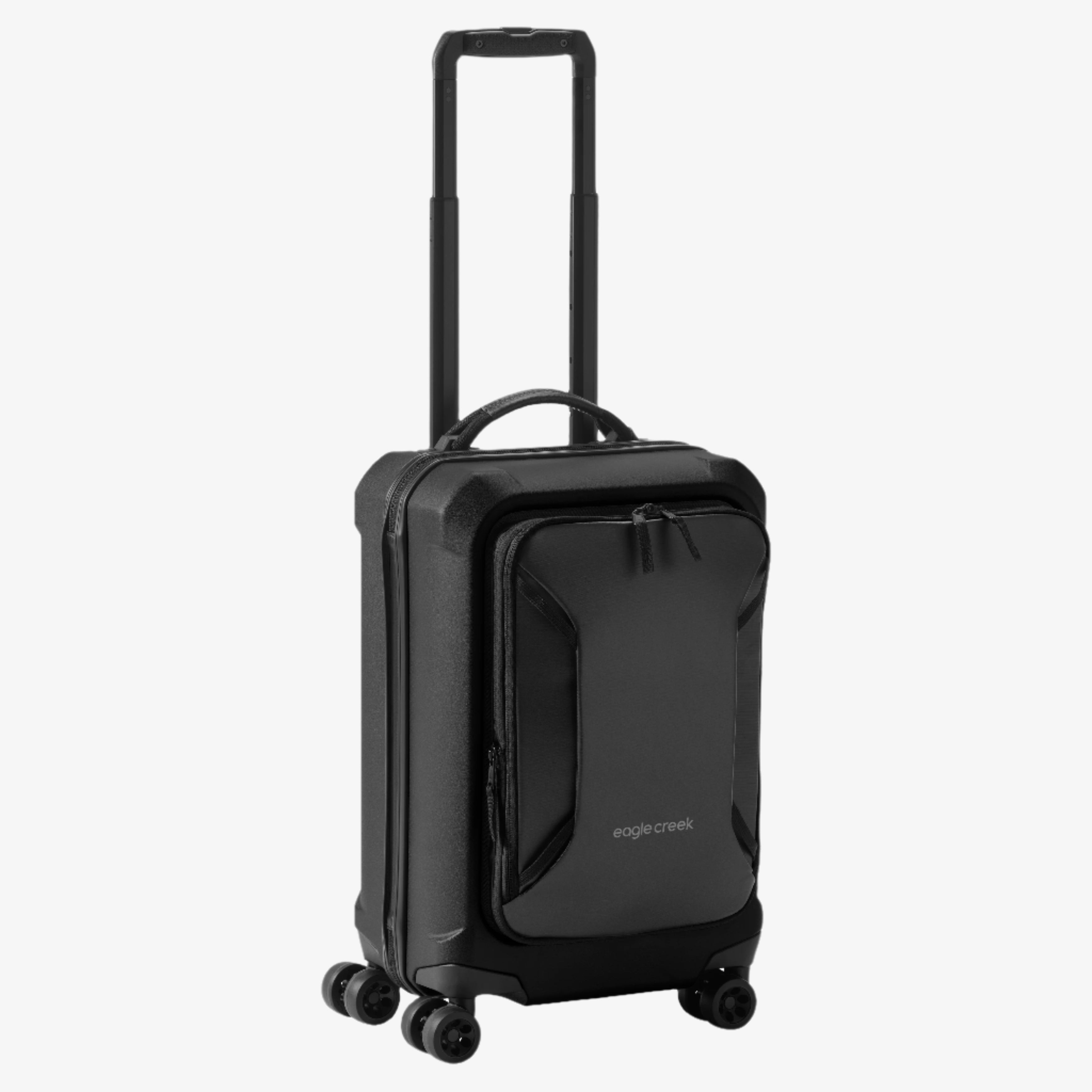




Who wins in the battle of carry-on vs checked bag? Those who travel often will tell you that bringing a carry-on is usually the way to go. It’s cheaper than checking a bag, and it ensures that the airline can’t lose your luggage.
But bringing a carry-on bag isn’t always ideal. Carry-on bags often come with stricter regulations, and it’s generally a good idea to double-check the airline’s most up-to-date rules and restrictions to avoid paying extra fees at the gate.
As with many aspects of air travel, carry-on suitcase regulations are subject to frequent changes. Different airlines impose their own carry-on luggage size and weight restrictions. Certain budget airlines have less overhead bin space and only allow smaller bags in the cabin, and some airlines that want to spend less on fuel impose stricter weight limits for carry-ons.
In this guide, we’ll cover specific carry-on luggage requirements and restrictions to help you feel secure about your travel plans and ensure your next jetsetting adventure goes as smoothly as possible.
In This Article:
TL;DR:
Understanding carry-on luggage size rules helps you travel smarter and avoid surprises at the airport. This guide explains typical size and weight limits for carry-on bags (often around 22″ × 14″ × 9″ in the U.S., though they vary by airline), highlights how different carriers enforce their own requirements, and covers international standards. It also offers practical tips for choosing the right carry-on, measuring it correctly, and packing efficiently to maximize space, all so your bag meets regulations and your trip starts smoothly.

What is the standard size for carry-on luggage?
In general, carry-on bags for domestic flights must be 22” x 14” x 9” (including handles and wheels) and weigh less than 50 lbs. However, this varies by airline, so check with your specific airline to ensure your bag meets the requirements.
Many airlines also now offer different ticket options, like “basic economy,” that don’t include a full-size carry-on bag in the ticket price. When purchasing your flight ticket, read the fine print to ensure your ticket includes a carry-on bag and not just a personal item.
Airline Policies
Alaska Airlines
- Carry-on dimensions: Maximum of 22" x 14" x 9" (including wheels and handles)
- Personal item: You can bring a personal item, like a purse, briefcase, or laptop bag, but it must fit under the seat in front of you.
- Included in ticket price: Yes, carry-on bags and personal items are included in the ticket price
American Airlines
- Carry-on dimensions: Maximum of 22" x 14" x 9" (including wheels and handles).
- Personal item: You can bring a personal item, like a purse, briefcase, or laptop bag, but it must fit under the seat in front of you.
- Both carry-on bags and personal items are included in the ticket price.
Delta Airlines
- Carry-on dimensions: Maximum of 22" x 14" x 9" (including handles and wheels).
- Personal Item: You can bring a personal item, like a purse, briefcase, or laptop bag, but it must fit under the seat in front of you.
- Both carry-on bags and personal items are included in the ticket price.
Frontier Airlines
- Carry-on dimensions: Maximum of 24" x 16" x 10" (including handles and wheels).
- Personal item: The maximum dimensions are 18" x 14" x 8", and it must fit under the seat in front of you.
- Personal items are included in ticket price; carry-on bags are not included in the standard fare and must be purchased separately.
Hawaiian Airlines
- Carry-on dimensions: Maximum of 22" x 14" x 9" (including handles and wheels).
- Personal Item: You can bring a personal item, like a purse, briefcase, or laptop bag, but it must fit under the seat in front of you.
- Both carry-on bags and personal items are included in the ticket price.
JetBlue Airlines
- Carry-on dimensions: Maximum of 22" x 14" x 9" (including handles and wheels).
- Personal Item: You can bring a personal item, like a purse, briefcase, or laptop bag, but it must fit under the seat in front of you.
- Both carry-on bags and personal items are included in the ticket price.
Spirit Airlines
- Carry-on dimensions: Maximum of 22" x 18" x 10" (including handles and wheels).
- Personal item: The maximum dimensions are 18" x 14" x 8", and it must fit under the seat in front of you.
- Personal items are included in ticket price, carry-on bags are not included in the standard fare and must be purchased separately.
Southwest Airlines
- Carry-on dimensions: Maximum of 24" x 16" x 10" (including handles and wheels).
- Personal item: You can bring a personal item, like a purse, briefcase, or laptop bag, but it must fit under the seat in front of you.
- Both carry-on bags and personal items are included in the ticket price.
United Airlines
- Carry-on dimensions: Maximum of 22" x 14" x 9" (including handles and wheels)
- Personal Item: You can bring a personal item, like a purse, briefcase, or laptop bag, but it must fit under the seat in front of you.
- Both carry-on bags and personal items are included in the ticket price
Note that while some airlines have different restrictions for domestic and international flights, all of the above airlines have the same carry-on luggage and personal item size rules for both domestic and international flights.

International Standards
The international rules for carry-on luggage size are still up to the individual airlines, but per the general IATA guidelines, carry-ons should be a maximum of 22 in (56 cm) x 18 in (45 cm) x 10 in (25 cm).
Airlines in Europe and Asia are generally stricter on the size and weight of carry-ons than those in North America and tend to enforce these regulations regularly.
Tips for Choosing Carry-On Luggage
When considering how to pack for your trip, the first step is choosing the right luggage.
- First, check the airline’s luggage regulations so you know what size/weight carry-on you can bring.
- Consider your travel style: Are you going on an adventurous trip that requires a large travel backpack? Or are you traveling for business and a proper rolling carry-on suitcase would be more appropriate?
- Assess luggage features: Features like durability, ease of rolling or handling, compartment quantity and ease of access are all things you may want to consider when choosing your carry-on bag.
If you’re in the market for a new carry-on bag that is durable, versatile, and easy to transport, be sure to check out the available selection of Eagle Creek carry-on luggage.

Packing Tips to Maximize Space In Your Carry-On
Now that you have your carry-on and have consulted the ultimate travel packing checklist, it’s time to pack for your trip.
Here are some tips for efficiently packing your carry-on:
- Roll or fold clothes for packing purposes
- Rolling clothes can save space in your carry-on and reduce wrinkles.
- Folding is often better for bulkier items and formal wear, helping maintain the shape of more structured garments.
- Packing cubes and compression bags
- Packing cubes: You can use packing cubes to help organize your items and maximize space.
- Compression bags: Compression bags, like Eagle Creek’s compression cubes, reduce the volume of your clothes. They work by removing excess air so that you can fit more into your suitcase.
- Utilize every space
- Fill the gaps in your carry-on with smaller items like underwear and accessories. You can even stuff socks and belts into the insides of your shoes.
- Plan outfits
- If you can map out what you’ll wear ahead of time, you’re less likely to fill your carry-on suitcase with extra items that will take up space and add weight.
How to Measure Carry-On Luggage
Size
Before you pull out your tape measure, if you know the make and model of your suitcase, you can usually find its dimensions online. Alternatively, you can use a measuring tape to verify the dimensions (length, width, and height) of your carry-on. Measure from the floor to the top of the handle for height, from one side to the other for width, and from the front to the back for depth.
Weight
The easiest way to measure the weight of your bag is to buy a handheld luggage scale. If you have a standard scale, weigh yourself first, then weigh yourself while holding your carry-on, and subtract your initial weight from the second measurement.


